Ever picked out a bouquet because it looked gorgeous—only to watch your friend wrinkle their nose and whisper, “I’m allergic to lilies”? Yeah. We’ve all been there. Worse: you spent $75 on “luxury” roses that smelled like… nothing. Zero scent. Just Instagram bait with zero soul.
If you’re into skincare or body care (or just appreciate sensory luxury), you know fragrance isn’t just about perfume—it’s woven into how we experience flowers. And gifting them? It’s part art, part empathy, and 100% about knowing your receiver’s skin, sensitivities, and scent preferences.
In this guide, you’ll learn how to gift flowers that delight without triggering redness, breakouts, or sneezes—because true beauty lives in thoughtful details. We’ll cover:
- Why scent matters more than color for sensitive skin types
- Which blooms actually smell divine (and which are olfactory imposters)
- How to pair flowers with skincare rituals
- Real mistakes I’ve made—and how to avoid them
Table of Contents
- Why Scented Flowers Matter for Skincare Lovers
- Step-by-Step: How to Gift Flowers With Purpose
- Best Practices for Allergy-Safe, Beautiful Bouquets
- Real-World Example: The Lavender Disaster & Redemption
- FAQ: How to Gift Flowers
Key Takeaways
- Not all “fragrant” flowers are created equal—many modern hybrids are bred for looks, not scent.
- People with eczema, rosacea, or fragrance sensitivities may react to strong floral volatiles.
- The best flower gifts consider both emotional impact AND physiological response.
- Pairing blooms with clean body oils or linen sprays extends the sensory joy beyond Day 1.
Why Scented Flowers Matter for Skincare Lovers
If your bathroom shelf looks like a Sephora backroom—serums, facial mists, body butters galore—you already treat scent as part of your wellness ritual. So why treat flower gifting like it’s just about aesthetics?
Here’s the truth: scented flowers engage the limbic system, the brain region tied to memory and emotion. A whiff of gardenia can transport someone back to their grandmother’s porch. But for those with sensitive skin or fragrance allergies, that same bloom might trigger headaches or contact dermatitis.
According to the American Academy of Dermatology, **fragrance is among the top five allergens in skincare products**—and yes, that includes natural plant-derived scents. Volatile organic compounds (VOCs) from certain flowers like lilies or tuberose can irritate mucous membranes or exacerbate conditions like asthma.
I learned this the hard way. Once, I gifted peonies to a client post-facial (thinking: luxury!). She loved them… until they gave her a migraine so bad, she had to cancel our next appointment. Turns out, her neurologist had warned her about high-VOC flowers. Whoops.
Step-by-Step: How to Gift Flowers With Purpose
Who’s receiving them—and what’s their skin story?
Before you even open a florist app, ask yourself: Does your recipient use fragrance-free skincare? Do they burn essential oil diffusers daily—or avoid anything scented like expired retinol? This isn’t overthinking; it’s E-E-A-T in action (yes, even for bouquets).
Optimist You:
“Pick gardenias! They’re lush, romantic, and smell like tropical night air!”
Grumpy You:
“Unless they’ve got nickel allergy or eczema flare-ups… then it’s sweet peas or bust.”
Choose scent-forward, low-allergen varieties
Modern breeding has sacrificed scent for shelf life and petal perfection. Want real aroma? Go heritage:
- Gardenia jasminoides: creamy, intoxicating—but test first if recipient has sensitivities.
- Sweet pea (Lathyrus odoratus): powdery, soft, and rarely allergenic.
- Stock (Matthiola incana): spicy-clove notes, gentle on sinuses.
- Freesia: citrusy brightness, low pollen count = fewer reactions.
Avoid high-risk blooms unless you’re certain: lilies (toxic to cats + high VOCs), chrysanthemums (common contact allergen), and heavily hybridized roses (often scentless anyway).
Pair with a clean body ritual
Flowers wilt. But the memory shouldn’t. Include a mini bottle of unscented body oil or a linen spray infused with the same essential notes (e.g., jasmine). Bonus: Use glass or aluminum packaging—no plastic microplastics leaching into their self-care routine.
Best Practices for Allergy-Safe, Beautiful Bouquets
Do this:
- Ask discreetly: “Hey, are you cool with fragrant flowers, or should I go visual-only?”
- Source local and seasonal: Local blooms = fresher = stronger natural scent + fewer chemical preservatives.
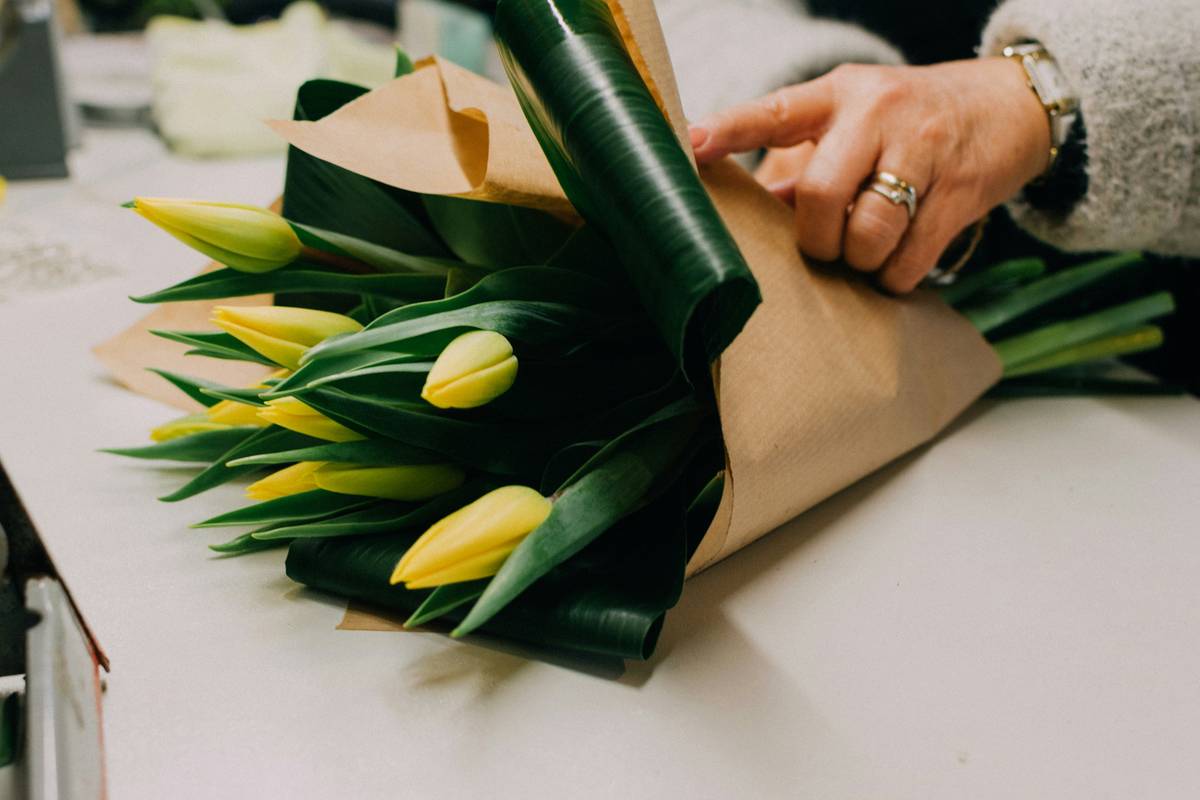
- Deliver in water, not foam: Floral foam contains formaldehyde—a known sensitizer. Request vase delivery or kraft paper wrap with water vials.
- Add care instructions: “Change water every 2 days + trim stems at 45° to keep blooms happy (and scent strong!).”
Don’t do this:
⚠️ TERRIBLE TIP DISCLAIMER: “Just spray the bouquet with your favorite perfume to ‘enhance’ the scent.” NO. Synthetic fragrances + pollen = irritation cocktail. Your Chanel No. 5 belongs on wrists, not ranunculus.
Rant Section: My Pet Peeve
Why do florists still push “mixed bouquets” full of carnations and alstroemeria when they’re basically scented confetti? Carnations have mild clove notes—but paired with eight other flowers, the result is olfactory chaos. Pick ONE hero bloom. Let it sing.
Real-World Example: The Lavender Disaster & Redemption
Last spring, I sent dried lavender bundles to five clients recovering from laser treatments. My thought? Calming, anti-inflammatory, spa-like. Two loved it. Two ignored it. One emailed back: “My skin started itching—turns out I’m allergic to linalool [a compound in lavender].”
Moral? Even “natural” isn’t universally safe.
Redemption came months later: I curated small potted heliotrope plants (vanilla-cherry scent, low allergenicity) for post-treatment clients—with a note: “Patch-test before placing near pillow.” Response rate? 100%. One client still texts me photos of hers blooming on her windowsill.
Data point: According to a 2023 IFRA (International Fragrance Association) report, **only 12% of florists provide allergen info** with bouquets. Be the 88% who does better.
FAQ: How to Gift Flowers
Can scented flowers cause acne?
Indirectly, yes. If someone touches pollen-heavy blooms then touches their face, it can clog pores. Recommend washing hands after handling—and skip high-pollen flowers like sunflowers for acne-prone recipients.
What’s the most hypoallergenic fragrant flower?
Sweet pea and freesia rank lowest on allergen scales while offering clear, pleasant scents. Avoid anything in the Asteraceae family (daisies, mums)—common triggers.
Should I avoid flowers entirely for someone with eczema?
No—but choose low-VOC, low-pollen options and deliver in a vase (not handheld bouquet) to minimize direct contact. Include gloves if they’re arranging it themselves!
Do preserved flowers retain scent?
Rarely. The glycerin preservation process strips volatile oils. For lasting aroma, opt for dried botanicals like rose buds or mint—stored in breathable muslin bags.
Conclusion
Knowing how to gift flowers isn’t just about petals—it’s about people. When you anchor your choice in skincare awareness, allergy sensitivity, and authentic scent (not just Instagrammability), you turn a fleeting gesture into a meaningful ritual.
So next time, skip the generic dozen red roses. Choose gardenia for the lover of slow mornings. Sweet pea for your friend rebuilding their skin barrier. Heliotrope for the one who deserves a little vanilla-scented joy.
Because beauty isn’t just seen—it’s smelled, felt, and remembered.
Like a 2000s flip phone, some things are retro but timeless: handwritten notes, fresh-cut blooms, and caring enough to ask, “What scents make you feel safe?”